
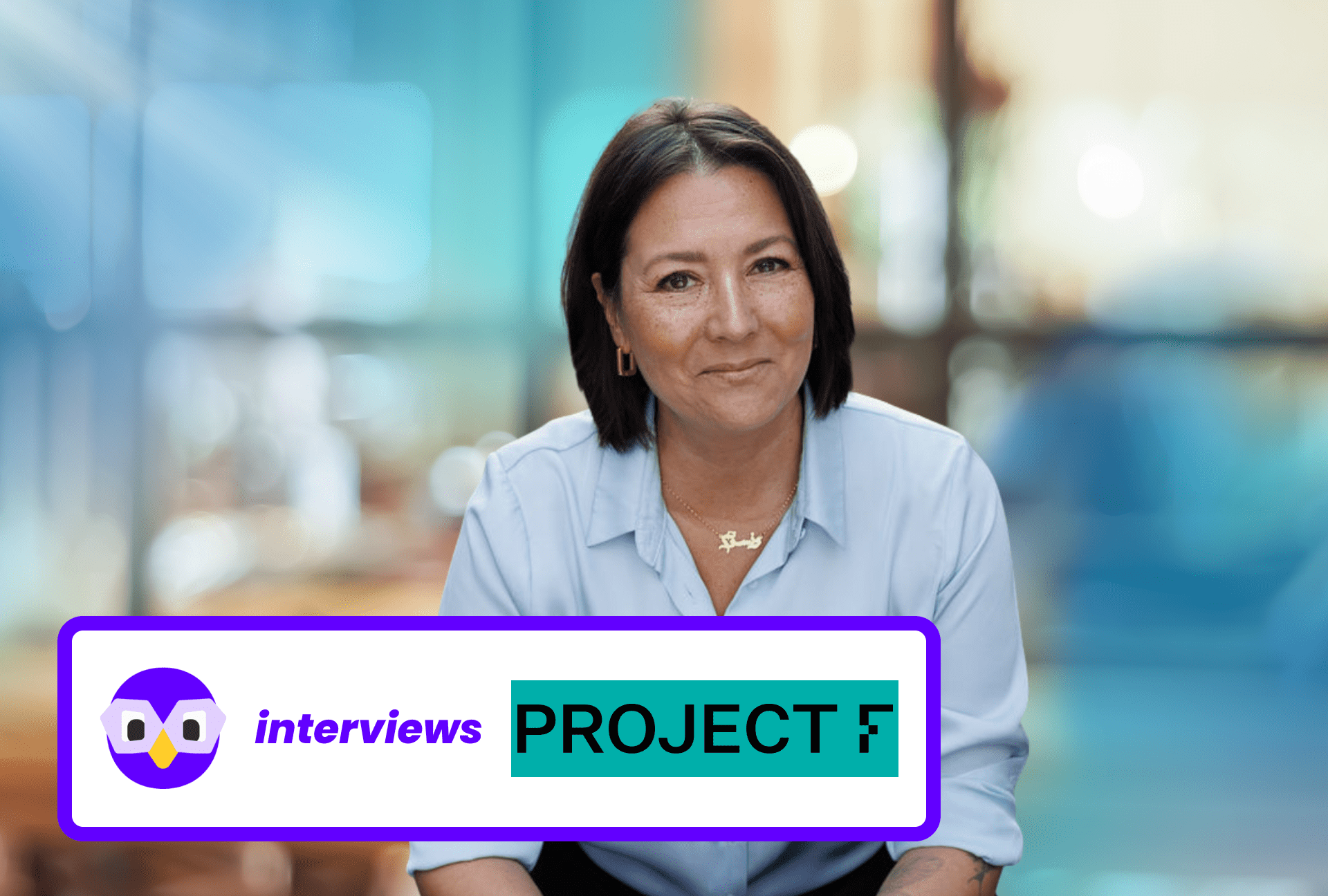
“If startups start with equitable parental leave, inclusive hiring practices, and clear policies from day one, they won’t face the challenges later. It sets the foundation for a diverse, resilient, high-performing team.”
Speaking with Emma Jones is like stepping into a masterclass on how work, leadership, and careers are evolving. Her voice carries conviction without force, clarity without ego. She isn’t just talking about gender diversity; she’s talking about building tech workplaces from the ground up where people don’t have to shrink themselves to fit in.
As the Founder and CEO of Project F, Emma partners with the Tech Council of Australia to deliver the T-EDI Standards, a detailed framework for gender equity and structural inclusion. Her work helps startups, and tech companies move beyond scattered diversity initiatives into systemic, measurable, meaningful change.
For founders and engineering leaders who are building teams from scratch, her message is both simple and urgent:
The earlier you start designing an inclusive environment, the more powerful, resilient, and high-performing your company becomes.
This conversation is for every founder, CTO, engineering manager, or tech professional who wants to build a workplace that actually works — for the people inside it, and for the products they ship.
If startups start with equitable parental leave, inclusive hiring practices, and clear policies from day one, they won’t face the challenges later. It sets the foundation for a diverse, resilient, high-performing team.
Emma believes early-stage companies have a powerful structural advantage:
they begin with a blank slate.
Unlike large organizations burdened with legacy culture issues, founders have the ability to embed fairness into the DNA of their company before any exclusions take root.
Founders are focused on traction, cash flow, and MVPs. Hiring quickly often defaults to men from familiar networks. But if you set policies upfront, you don’t have to fix cultural problems later. It doesn’t slow you down — it protects your people and your product.
She has built a startup toolkit — a set of 20 legally aligned policies for companies under 50 people. It includes:
Companies like Search.io and Dovetail used it as their blueprint. Search.io is a great example of a startup that built equitable foundations and recruited a diverse team, resulting in it directly contributing to their successful acquisition.
For founders, that matters. Teams that feel psychologically safe and supported ship faster, stay longer, and innovate better.
Emma offers two deceptively simple steps, but they transform everything.
Startups often demand a Computer Science degree and five years of experience. That cuts out a massive pool of capable women. We need to look at skills, not pedigree. Career-switchers are gold.
She has seen women enter the industry from journalism, marketing, project management, and thrive as engineers — elevating not only code quality but team culture.
Policies don’t just protect employees; they prevent cultural drift, bias, and attrition. Hiring is just the beginning. If the culture isn’t inclusive, you lose every woman you bring in. Diversity is about supporting and retaining talent, not just checking boxes.
These are fundamentals, not luxuries, and founders who implement them early never regret it.
Emma leans into one of the most overlooked truths:
“By 40, more than half of women leave tech — not because of kids, but because the environment is inhospitable. Early attention to culture, inclusion, and flexibility is essential to keep talent thriving.”
She shares a story that stayed with her, one that perfectly illustrates the hidden opportunity in broadening hiring criteria:
“One of our first female engineers came from journalism. She saved up, did a coding bootcamp, and joined as a junior engineer. The inappropriate banter stopped immediately. She introduced JavaScript study groups, pair programming, and meetups like Girl Geeks, plus she was an excellent engineer. Her impact was profound — and yet she was initially unsure if she was hired just because she was a woman.”
Sometimes, the person who transforms team culture isn’t the one with the longest résumé, but the one who brings perspective, resilience, and curiosity.
I launched Project F because I wanted to move beyond branding exercises. Too often, companies say, ‘We support diversity,’ but the environment for women is inhospitable. We needed to address structural barriers — policies, practices, and culture — not just optics.
The T-EDI Standards, developed with the Tech Council of Australia, codify best and leading practices across:
Emma explains that the systemic barriers keeping women underrepresented since the 1960s have not changed — tech is still operating on old norms.
We brought in an expert everyone thought was amazing — a male marketing automation guru — to fix a problem I’d been raising for months. Suddenly, the leadership team agreed with him. Facepalm moment. That’s when I knew we needed Project F.
Her strategy is unique because it doesn’t rely on women convincing men. It enables men to talk to other men — a shift that changed everything.
She created Men Championing Change, a grassroots meetup inspired by Liz Broderick’s national initiative (Champions of Change Coalition).
Within months, more than a thousand engineering leaders and tech founders joined.
Leaders came back from these meetups saying, ‘The changes we made have been game-changing.’ CTOs and engineering leaders led the conversations — not me. That’s why it worked.
When inclusion becomes peer-driven, it becomes scalable.
Emma’s story carries the weight of lived experience — not as criticism, but as context. Understanding where the industry has come from helps explain why her work today matters so deeply.
I’ve called myself an accidental feminist. I grew up in London in the 1970s. Things were casually sexist and racist in ways that seem shocking today. You saw it on prime-time TV, in your family, everywhere. It shaped your expectations.
When she entered the tech sector decades ago, the culture reflected norms of that era — norms that affected everyone, not just women.
Working in software companies, you’d get your bottom slapped and people would laugh it off. You were left out of informal networks, pub meetings, golf trips, and you tolerated it because that was the Environment.
She shares these moments to illustrate how cultural habits become invisible when they’re the norm. Many of these weren’t malicious acts — they were inherited systems and behaviors that went unexamined for years. By her 40s, Emma realized the challenges hadn’t disappeared, they had simply become subtler.
I knew it was wrong, but I didn’t understand the mechanisms behind it. I needed to articulate it clearly, especially when tech leads asked, ‘Why are we focusing on hiring more women? Shouldn’t it be the best person for the job?’
That curiosity drove her into deeper research — not to highlight what was broken, but to understand how to build something better.
It became the foundation that eventually led to Project F, and to the frameworks many founders and Engineering leaders rely on today.
“Talent thrives when everyone belongs. If we start inclusive, the future of tech can be extraordinary.” — Emma Jones
As our conversation comes to a close, her final words linger — not as an idealistic call, but as a blueprint for founders who want to build companies that last.
She isn’t just talking about policies or checklists, she’s speaking about reshaping the very DNA of tech culture. From her first steps in leadership to founding Project F, every initiative has been about creating spaces where talent is defined by ability, creativity, and drive rather than gender.
The future of tech isn’t just about building products, it’s about building for people. Talent thrives when everyone belongs. If we start inclusive, the future of tech can be extraordinary,” Emma reflects, her words echoing long after the conversation ends.
It’s a challenge and a call to action for every founder, every hiring manager, and every tech professional listening: see beyond the status quo, design workplaces that are innovative and equitable, and remember that the most enduring innovations come from teams that reflect the richness of the world they aim to serve.
Her message is a quiet but powerful challenge to every founder, engineering leader, or tech professional reading:
Because the future of tech won’t be defined only by the systems we build, but by the people we choose to build them with.
